
Today is international women’s day, and we wanted to ask our own Tara Hagan-Fields, RMT a few questions about what it means to be a Women’s Health focused practitioner. Why did you decide to focus your practice on Women’s Health? I chose to focus my practice on Women’s Health because at the time I truly felt that there were too many therapists that were focusing in on general health and wellness. There weren’t enough therapists with a voice and a specialization in anything specific, especially not in the women’s health field. I was a new grad in a world of many RMT’s. I graduated with 30+ fellow colleagues in 2006, we all had the same level of training and the same knowledge base that we had learned while in school. I immediately needed to separate myself from the group as an individual who understood something more then the rest. I had developed a passion for the treating of pregnant women while in school, so after graduation, I immediately went after more courses! I felt I needed to learn more!. Along the way I grew as a therapist and as a woman. I recognized my passion was more then just treating pregnant women; It actually was more about treating all women, and women’s health related issues. Today I am completely
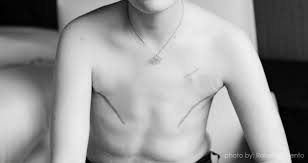 Pain and tightness suffered post mastectomy/ lumpectomy can limit one’s life drastically. Myofascial Release can help create vast changes by softening dense scars and fibrosed fascia that remain unchanged with traditional therapy and stretching. Traumatized tissue can have a cascading effect on the body. Locally, tightened and fibrous fascia can restrict blood flow and lymphatic flow resulting in lymphedema. Auxiliary cording can also occur, causing a significant loss of range of motion in the shoulder, leading to a loss of function. Pain and weakness can occur in the shoulder, arm and chest wall. Burning, pins and needles, numbness, or spasms can also occur in these areas. Tightness, with time, can start to effect areas not associated with the scar even if these areas are far removed from the local site. Symptoms not “normal” to mastectomy, lumpectomy, reconstruction, or augmentation can start to occur. Headaches, jaw pain, low back pain, pelvic pain, digestive issues, postural changes, hormonal imbalances, etc, may become a “common” occurrence for you. The inability to move, or the pain suffered with common range of motion and activity c